
Desert Museum Palo Verde
Parkinsonia × 'Desert Museum' identification, care, and maintenance in the Phoenix metro.
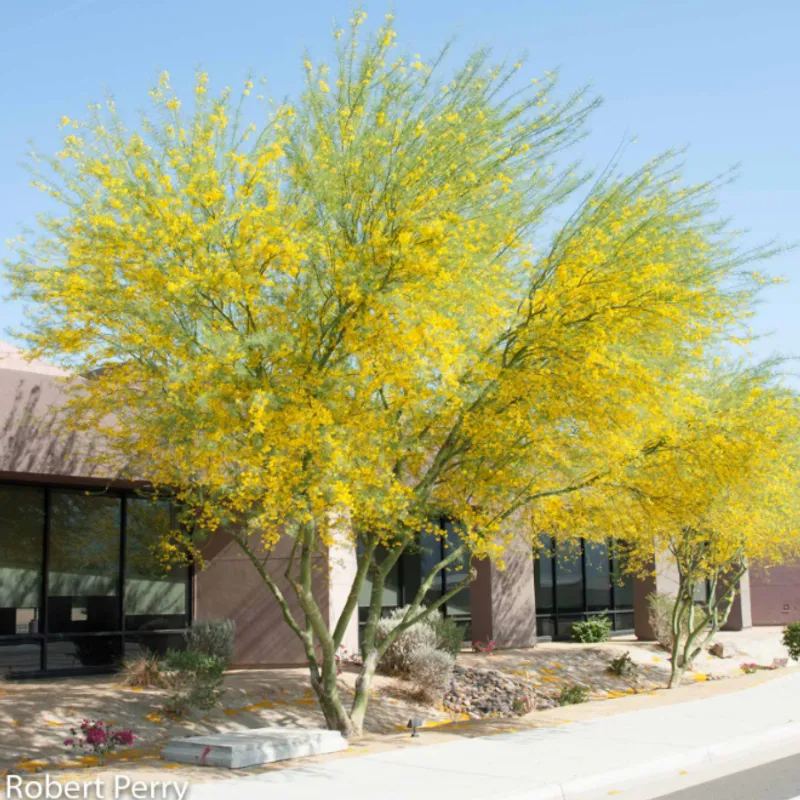
About the Desert Museum Palo Verde
The Desert Museum Palo Verde (Parkinsonia × 'Desert Museum') is a small to medium-sized hybrid tree, typically reaching 20 to 30 feet tall with a 20 to 25 foot spread. Bred from three Palo Verde species, it is prized for its thornless green trunk, drought tolerance, and is one of the most well-adapted native trees in the Phoenix metro area. Common throughout Scottsdale, Cave Creek, and Fountain Hills where native desert landscaping is preferred.
- Scientific Name
- Parkinsonia × 'Desert Museum'
- Category
- Desert Native
- USDA Zones
- 9b-10a
Growing Conditions in Arizona
Desert Museum Palo Verde performs best in full sun exposure, which is abundant in the Phoenix metro. Most Valley soils are alkaline (pH 7.5-8.5) with caliche layers that restrict drainage and root growth. Many species need iron supplements to prevent chlorosis. When planting a Desert Museum Palo Verde, choose a location that receives full sun and has well-draining soil. The tree prefers slightly acidic to neutral soil but can tolerate a range of soil types. Municipal water in the Phoenix area is hard and alkaline. Deep watering on an infrequent schedule mimics natural desert rainfall patterns and encourages deep root development.
Desert Museum Palo Verde Care Guide
There is no single best month to prune most species in Arizona, so we time the work to the tree and the goal. Avoid heavy pruning in summer heat, which can cause sunscald. For Desert Museum Palo Verde, structural pruning in the first 5 years establishes good branch architecture. Mature trees need deadwood removal and crown thinning every 2-3 years. Monsoon season (July-September) brings sudden high winds and heavy rain. Trees with dense canopies or shallow roots are vulnerable to blowover. Crown thinning before monsoon season reduces wind resistance. The wood of the Desert Museum Palo Verde is hard and durable, making it a popular choice for woodworking projects such as furniture and cabinetry. The tree's branches can also be used for firewood or as a natural trellis for climbing plants. Our pruning and care recommendations follow ISA and ANSI A300 standards.
Common Problems & Diseases
Pruning needs to be done frequently as the tree grows fast and the weight can misshape the tree drastically causing bent and broken limbs also making it susceptible to wind damage in storms. The Desert Museum Palo Verde is generally pest and disease-free, but it can be susceptible to root rot in poorly drained soil. To prevent this, ensure good drainage around the tree and avoid overwatering. If you notice any of these issues with your Desert Museum Palo Verde, our arborist team can diagnose the problem on-site and recommend the right treatment.
Tree Services for Desert Museum Palo Verde
Where Desert Museum Palo Verde Grows in the Valley
Frequently Asked Questions
When is the best time to prune a Desert Museum Palo Verde in Arizona?addremove
We recommend pruning Desert Museum Palo Verde trees when it best serves the tree rather than on a fixed calendar date. We prune to clear deadwood, improve structure, and reduce wind load before monsoon season, and we avoid heavy cuts during the peak summer heat, when fresh wounds can sunscald the bark. Happy Tree Guys trims year-round and will recommend the right timing for your specific tree during a free estimate.
How much water does a Desert Museum Palo Verde need in the Phoenix area?addremove
A newly planted Desert Museum Palo Verde needs deep watering 2-3 times per week during Arizona summers, tapering to weekly in winter. Established trees (3+ years) are more drought-tolerant but still benefit from deep watering every 7-14 days during the hottest months. Water slowly at the drip line, not at the trunk, to encourage deep root development. Our arborists can set up an efficient watering schedule specific to your landscape.
What are common problems with Desert Museum Palo Verde trees in Arizona?addremove
The most common issues we see with Desert Museum Palo Verde in the Phoenix metro are iron chlorosis (yellowing leaves from alkaline soil), heat stress during summer, and wind damage during monsoon season. Our soil injection service corrects nutrient deficiencies, and crown thinning reduces monsoon vulnerability. Call Happy Tree Guys at 602-786-7536 if you notice any signs of decline.
How tall does a Desert Museum Palo Verde grow in Arizona?addremove
The Desert Museum Palo Verde is a small to medium-sized tree, typically reaching heights of 20 to 30 feet and a spread of 20 to 25 feet. In the Phoenix metro's warm climate, growth rates are typically on the faster end of the range. If your Desert Museum Palo Verde is outgrowing its space, Happy Tree Guys can provide professional crown reduction or structural pruning to manage its size safely.
Questions About Your Desert Museum Palo Verde?
Our ISA-certified arborists can assess, prune, or treat your tree. Call for a free estimate.