
Madagascar Palm
Pachypodium lamerei identification, care, and maintenance in the Phoenix metro.
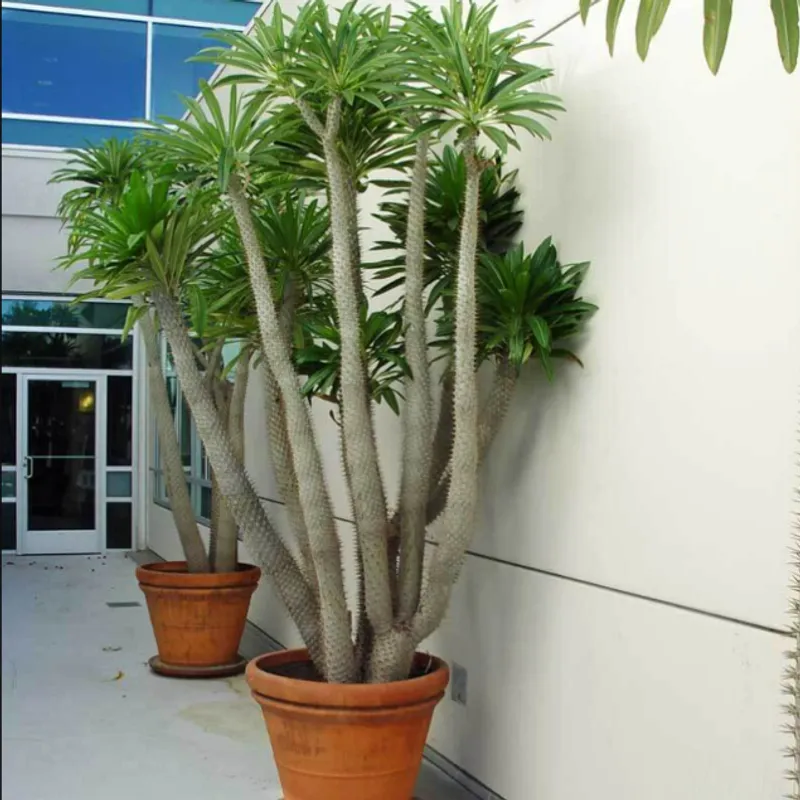
About the Madagascar Palm
The Madagascar Palm (Pachypodium lamerei) is a slow-growing succulent tree, hardy in USDA zones 9b to 10a, that can take several years to reach its full height. Native to Madagascar, it is a popular, low-maintenance ornamental valued for its unique appearance. You'll find these throughout Scottsdale resort properties, Paradise Valley estates, and Phoenix commercial landscapes.
- Scientific Name
- Pachypodium lamerei
- Category
- Palm
- USDA Zones
- 9b-10a
Growing Conditions in Arizona
Madagascar Palm performs best in full sun exposure, which is abundant in the Phoenix metro. Most Valley soils are alkaline (pH 7.5-8.5) with caliche layers that restrict drainage and root growth. Many species need iron supplements to prevent chlorosis. A. Madagascar Palm trees prefer dry soil and should be watered sparingly, allowing the soil to dry out completely between waterings. Municipal water in the Phoenix area is hard and alkaline. Deep watering on an infrequent schedule mimics natural desert rainfall patterns and encourages deep root development.
Madagascar Palm Care Guide
There is no single best month to prune most species in Arizona, so we time the work to the tree and the goal. Avoid heavy pruning in summer heat, which can cause sunscald. For Madagascar Palm, we recommend annual frond removal of dead or hanging fronds. Never remove green fronds, this weakens the palm and invites pests. Skinning (removing old frond boots) is cosmetic and optional. Madagascar Palm, also known as Pachypodium lamerei, is a succulent tree that is native to Madagascar. It is a popular ornamental plant that is commonly grown for its unique appearance and low maintenance. Our pruning and care recommendations follow ISA and ANSI A300 standards.
Common Problems & Diseases
Madagascar Palm is relatively resistant to most diseases and pests, but it can be susceptible to mealybugs and spider mites. If you notice any of these issues with your Madagascar Palm, our arborist team can diagnose the problem on-site and recommend the right treatment.
Tree Services for Madagascar Palm
Where Madagascar Palm Grows in the Valley
Frequently Asked Questions
When is the best time to trim a Madagascar Palm in Arizona?addremove
The best time to trim a Madagascar Palm in Arizona is late spring to early summer, after the risk of frost has passed. Happy Tree Guys recommends removing only dead or dying fronds, never cut green fronds, as this stresses the palm and slows growth. Annual trimming keeps your Madagascar Palm healthy and looking its best.
How much water does a Madagascar Palm need in the Phoenix area?addremove
A newly planted Madagascar Palm needs deep watering 2-3 times per week during Arizona summers, tapering to weekly in winter. Established palms (3+ years) are more drought-tolerant but still benefit from deep watering every 7-14 days during the hottest months. Water slowly at the drip line, not at the trunk, to encourage deep root development. Our arborists can set up an efficient watering schedule specific to your landscape.
What are common problems with Madagascar Palm trees in Arizona?addremove
The most common issues we see with Madagascar Palm in the Phoenix metro are weevil borers, fusarium wilt, and cosmetic damage from monsoon winds. Yellowing fronds can indicate nutrient deficiency in our alkaline soil. Happy Tree Guys offers health assessments and treatment plans for struggling palms.
How tall does a Madagascar Palm grow in Arizona?addremove
A. Madagascar Palm is a slow-growing tree that can take several years to reach its full height. In the Phoenix metro's warm climate, growth rates are typically on the faster end of the range. If your Madagascar Palm is outgrowing its space, Happy Tree Guys can provide professional crown reduction or structural pruning to manage its size safely.
Related Tree Species
Questions About Your Madagascar Palm?
Our ISA-certified arborists can assess, prune, or treat your tree. Call for a free estimate.